Smart Health
Global nutrition apps are built around calorie counts first. Arabic support is thin, local dishes are missing, and the habit becomes logging—not understanding what you eat.
Project details
- Client
- Digital product
- Year
- —
- Scope
- UX & UI Design
Project overview
Smart Health
Stage 01
Problem
Global nutrition apps are built around calorie counts first. Arabic support is thin, local dishes are missing, and the habit becomes logging—not understanding what you eat.
Stage 02
Research
This case is grounded in a competitive review of MyFitnessPal, Yazio, Lifesum, Google Fit, and HealthifyMe. The pattern was consistent: strong databases and activity graphs, weaker Arabic, limited local food, and paywalls around the useful layers. No separate user-interview program is documented in the source.
Stage 03
Process
The product direction follows those gaps rather than inventing a new research stream: Arabic-first copy and layout, simple meal logging, and education about habits instead of calorie theatre. Complexity that belongs to global trackers stays out of the first session.
Stage 04
Solution
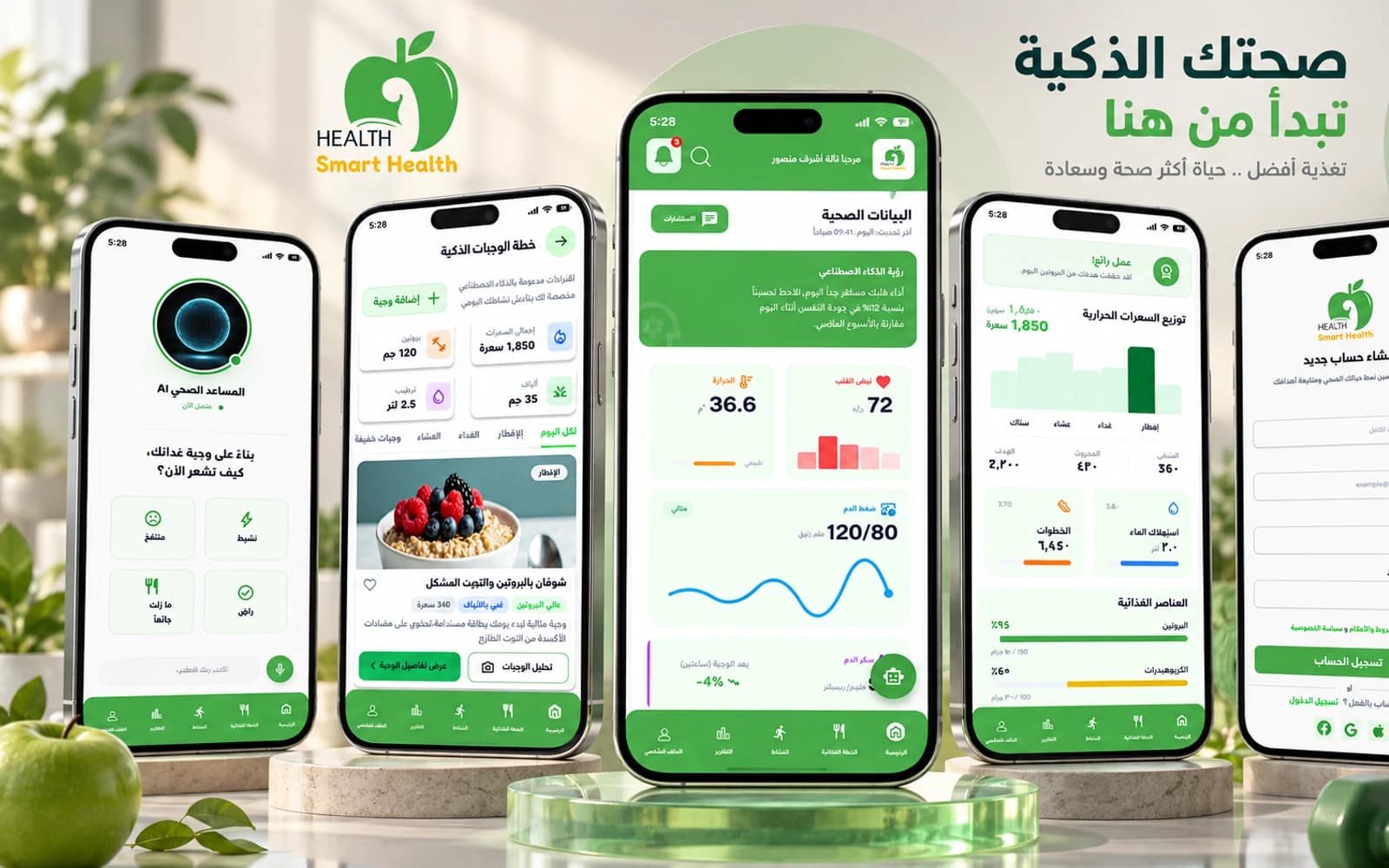
Smart Health is designed as a quiet nutrition companion: log meals, answer a few questions about type and amount, and receive AI-assisted notes and suggestions as design intent—not as a clinical service. Daily and weekly reports make progress readable. The experience is meant to work across devices in Arabic.
Stage 05
Impact
The aim is awareness and a habit people can keep—not unverified medical outcomes or a claim that the food database or models are already complete.
Your next project
Need a clearer experience for your product?
Let’s define the problem, understand the users, and build the next step with confidence.